Best 12V Boat Batteries: Top Picks for Marine Power
Choosing a reliable 12V battery is essential for boating, whether powering trolling motors, electronics, or lithium backup systems. The following selections are among the best options on the market, balancing capacity, weight, lifecycle, and marine suitability. Read on to compare each model’s strengths and how they fit common boating setups.
| Product | Type | Capacity | Best For | Key Benefit |
|---|---|---|---|---|
| Weize Deep Cycle AGM 12V 100Ah | AGM Lead-Acid | 100Ah | All-day trolling, RV, solar | Low self-discharge, maintenance-free |
| Newport 12V 50Ah Deep Cycle AGM | AGM Lead-Acid | 50Ah | Lightweight setups, simple trolling | Lightweight and sealed |
| HRBEENERGY 100Ah LiFePO4 12.8V | LiFePO4 | 100Ah | High-cycle, solar, boat systems | 100A BMS, fast charging options |
| Litime 12V 100Ah LiFePO4 (Group 31) | LiFePO4 | 100Ah | Marine trolling and RVs | Built-in 100A BMS, low-temp protection |
| Litime 12V 100Ah LiFePO4 (Group 31) with Bluetooth | LiFePO4 | 100Ah | Remote monitoring, harsh environments | Bluetooth, low-temp protection |
Note: The table highlights general strengths. Always verify terminals, mounting, and compatibility with your boat’s electrical system before purchase.
Weize 12V 100Ah AGM Deep Cycle Battery
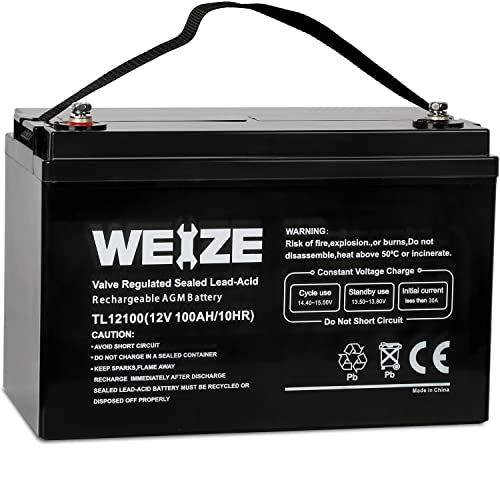
The Weize battery uses AGM technology to deliver a maintenance-free sealed unit with a compact footprint. Its 100Ah capacity supports trolling motor operation and house loads, while the 1–3% monthly self-discharge helps with longer storage between boating seasons. The design emphasizes a durable, leak-resistant form factor suitable for marine compartments. With a 1150A max discharge current for short bursts, it handles motor starts and accessory loads effectively. Temperature tolerance broadens usability in variable climates, though optimal performance aligns with moderate temperatures.
Features include a maintenance-free AGM design, reduced self-discharge, and a robust reserve for marine applications. The included terminal arrangement supports straightforward wiring for many boat setups, though exact compatibility with your trolling motor or inverter should be confirmed.
Newport 12V 50Ah Deep Cycle AGM Marine Battery

Newport Vessels presents a lightweight, sealed AGM deep cycle battery designed for trolling motors and marine electronics. At about 32 pounds, it reduces load while still delivering reliable power for modest boat setups. The sealed construction minimizes leakage risk, which is a critical consideration in tight battery compartments. This option pairs well with smaller boats or setups prioritizing weight savings. Its design emphasizes durability and maintenance-free operation for long boating seasons.
Key advantages include easy handling, sealed construction for leakage prevention, and compatible performance with trolling motors. If your boat requires a lighter 12V option without sacrificing reliability, this model offers a practical balance of weight and capacity. Confirm fit with your existing motor controller and battery tray dimensions for best results.
HRBEENERGY 100Ah LiFePO4 12.8V Battery

This 12.8V LiFePO4 battery provides a lightweight, high-cycle alternative to lead-acid. It features a built-in 100A BMS for protection against overcharging, discharging, and short circuits, along with low-temperature cut-off. The battery is designed as a direct replacement for lead-acid or AGM in many marine applications and is notably lighter—often around 70% lighter than traditional equivalents. It supports fast charging and offers a compact footprint suitable for boats with restricted storage space.
Applications include trolling motors, solar integrations, and emergency power. The LiFePO4 chemistry supplies consistent performance across a wide temperature range, with safeguards that enhance reliability on the water. Proper charging protocol and temperature management help maximize lifecycle and safety in marine environments.
Litime 12V 100Ah LiFePO4 Battery (Group 31)

This LiFePO4 battery combines a 100Ah capacity with a built-in 100A BMS and low-temperature protection. It is designed for marine trolling motors, boats, RVs, and solar setups. The battery’s Group 31 form-factor aligns with common marine battery boxes, and the BMS supports charging safety across varied power sources. The low-temperature protection helps prevent damage in cold climates, while the robust protection suite guards against overcharge, over-discharge, and short circuits.
For boat users seeking extended lifecycle (thousands of cycles) and lightweight performance, this model offers a compelling option. It pairs well with solar charging or alternator charging systems when matched with a proper BMS and charging profile.
Litime 12V 100Ah LiFePO4 Battery (Group 31) Bluetooth
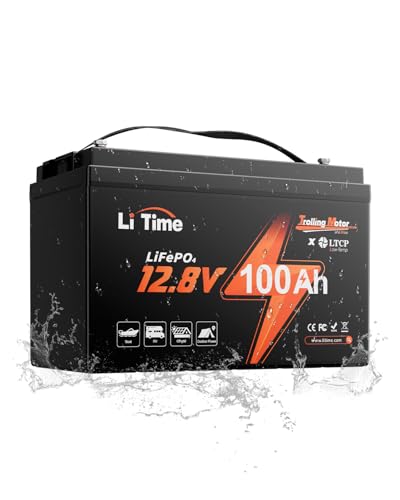
This variant adds Bluetooth monitoring for remote status checks, battery health, discharge control, and system diagnostics. Like other LiFePO4 Group 31 offerings, it includes a built-in 100A BMS and low-temperature protection. The Bluetooth feature enables quick verification of charge state and alerts, which can simplify on-board monitoring for off-grid or remote setups. It remains a compact, high-cycle option suitable for marine use and RVs, particularly when real-time battery monitoring matters to the operator.
Pros include enhanced visibility and control via mobile devices, strong protections, and compatibility with a range of charging sources. Users should ensure Bluetooth compatibility with their phone or monitoring system and verify that installation space accommodates the unit and its wiring requirements.
Buying Guide: Key Purchase Considerations for 12V Boat Batteries
When selecting a 12V battery for boating, consider these factors to match performance with your vessel’s needs:
- Chemistry: AGM and LiFePO4 offer different trade-offs. AGM is typically cheaper upfront and maintenance-free, while LiFePO4 delivers longer lifecycle, lighter weight, and stable performance, especially for frequent cycling.
- Capacity and weight: Larger boats or higher power demands benefit from 100Ah or more, but weight matters for balance and fuel efficiency. Group size (like Group 31) affects compatibility with battery trays and mounting.
- BMS and safety features: A robust Battery Management System (BMS) protects from overcharge, over-discharge, and short circuits. Low-temp protection is crucial in winter storage or high-latitude boating.
- Lifecycle and cycles: LiFePO4 typically provides thousands of deep cycles, while AGM batteries offer several hundred to around a thousand depending on usage. If you recharge often, high-cycle LiFePO4 can be more economical over time.
- Weight and space: Marine installations benefit from lighter batteries with compact footprints. Ensure tray dimensions, terminal arrangements, and venting requirements align with your setup.
- Charging compatibility: Confirm that your boat’s charging system (alternator, solar, or shore power) supports the battery’s charging profile (voltage and current). Some LiFePO4 batteries require specific charging voltages (e.g., around 14.6V for LiFePO4).
- Environmental resilience: IP ratings, water and dust protection, and salt spray resistance are important for harsh marine conditions. Look for sealed designs to minimize leakage risks.
- Monitoring options: Bluetooth or app-based monitoring can help track state of charge and temperature, especially for boats with complex electrical loads.
How to choose:
– For long trolling sessions and high electrical load, LiFePO4 with a strong BMS is advantageous due to weight savings and lifecycle.
– For budget-focused or small boats, AGM options from reputable brands provide reliable performance with maintenance-free design.
– If remote monitoring is important, select a LiFePO4 model with Bluetooth or networked monitoring capabilities.
Maintenance and care: Store batteries with a partial state of charge if not in use for extended periods, avoid exposing them to extreme temperatures, and follow charging guidelines specified by the manufacturer to maximize lifespan.