Best Air Conditioning for Boats: Top Marine AC Units for Calm Voyages
Finding reliable air conditioning for boats means balancing cooling power, marine durability, and energy efficiency. This guide showcases five marine AC options and accessories that perform well on waterways, from self-contained units to moisture-control accessories. Each option is selected for usefulness, compatibility with common boats, and proven performance in harsh maritime environments.
Overview of highlighted products:
| Product | Brand | Key Feature | Link |
|---|---|---|---|
| ECD16K-HV A/C RETROFT KIT 410A | SEALAND | Retrofit kit for higher-capacity cooling | View |
| 16,000 Btu/h Self Contained Marine A/C | MarinAire | Quiet operation with titanium coil option | View |
| 11,000 Btu/h Self Contained Marine A/C | MarinAire | Quiet, efficient, corrosion-resistant coil | View |
| 6,000 Btu/h Self Contained Marine A/C | MarinAire | Compact, high efficiency, rotor design | View |
| Ironwood Pacific Drywave 1000 Air Dryer | Ironwood Pacific | Prevents condensation, low power draw | View |
SEALAND ECD16K-HV A/C Retrofit Kit 410A
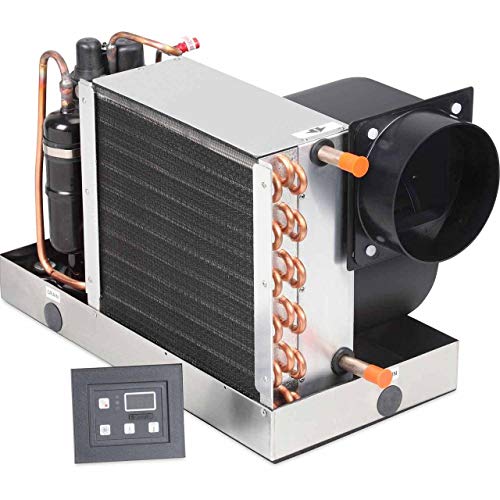
The SEALAND ECD16K-HV retrofit kit provides a high-capacity cooling option for boats that need a retrofit solution. Built to support 410A refrigerant systems, this kit is designed to fit with existing marine HVAC layouts while offering strong cooling capability. When upgrading an older system, consider compatibility with power supply and vessel electrical capacity to ensure optimal performance. Retrofit installations typically require professional handling to ensure proper seals and electrical safety on a marine environment.
MarinAire 16,000 Btu/h Self Contained Marine A/C and Heat Pump

MarinAire’s 16,000 Btu/h self-contained marine unit combines cooling and heating for versatile climate control on boats. Aimed at mid-sized cabins, it emphasizes quiet operation, a lightweight profile, and a titanium coil designed for corrosion resistance in salty coastal environments. Energy efficiency is supported by modern refrigerants and a compact design that fits a variety of enclosure layouts. Noise reduction features contribute to a calmer onboard atmosphere, which is particularly valuable for sleeping or relaxing areas below deck.
MarinAire 11,000 Btu/h Self Contained Marine A/C and Heat Pump

The MarinAire 11,000 Btu/h model targets compact cabins and smaller boats where space is at a premium. It emphasizes quiet operation through an integrated sound cover that reduces noise by up to 60%, contributing to a more comfortable interior climate without disrupting deck activities. The unit uses a titanium coil to resist corrosion, and its lightweight, energy-efficient design supports longer trips between refits or refuels. Bonding to a sacrificial anode is recommended for enhanced corrosion protection in harsh marine environments.
MarinAire 6,000 Btu/h Self Contained Marine A/C

The MarinAire 6,000 Btu/h unit is a compact option designed for smaller boats or limited engine room space. It emphasizes high efficiency with a compact blower and efficient heat exchange. The product line often pairs this unit with a robust titanium coil that offers corrosion resistance, an important factor for boats exposed to salt air and spray. Its smaller footprint helps maintain cabin layout flexibility while delivering dependable cooling in hot climates or after long days at sea.
Ironwood Pacific Drywave 1000 Air Dryer

Air moisture control is crucial for boat comfort and equipment longevity. The Drywave 1000 uses gentle drying to reduce condensation in enclosed spaces, minimizing dampness that can affect electronics and fabric interiors. It operates with low power draw and relies on natural convection to move air, making it suitable for flagging humidity issues in cabins, galleys, or bilge areas. While not a primary cooling device, it complements air conditioning by maintaining interior humidity at more comfortable levels.
AIRLOCK One – Boat & RV Air Purifier

Air quality adds to onboard comfort, and the AIRLOCK One purifier uses bipolar ionization to neutralize odors and contaminants. This device supports a healthier interior environment in boats with or without high-end HVAC systems. Installation is designed to be quick, enabling crews to position the purifier for optimal airflow. The technology may contribute to more pleasant living spaces, especially on longer trips or in compact cabins where odors can build up quickly.
Buying Guide: Key Purchase Considerations
- Boat size and HVAC load: Match unit BTU ratings to cabin volume. Larger boats may require higher-capacity units or multiple zones for even cooling.
- Type and installation: Self-contained units simplify installation but need adequate space and ventilation. Retrofit kits enable upgrading existing systems but may require professional service for seals and refrigerant handling.
- Corrosion resistance: Titanium coils and corrosion-resistant components extend life in saltwater environments. Ensure proper bonding to sacrificial anodes where recommended.
- Energy efficiency: Look for units that use energy-efficient refrigerants (like R410A) and lightweight designs to minimize power draw on boats with limited electrical capacity.
- Noise considerations: A quieter system improves comfort, especially in cabins. Consider sound-dampening features or sound shields when choosing a model.
- Moisture and air quality: Condensation control and air purification add comfort—Drywave-style desiccants help humidity, while purifiers reduce odors and contaminants for a fresher interior.
- Maintenance and compatibility: Check compatibility with existing systems and ease of service. Some units are designed to integrate with multiple brands or as part of a larger marine HVAC solution.
- Warranty and support: Favor brands with marine-focused support and clear warranty terms to minimize downtime on the water.
In selecting marine air conditioning, consider how you use your boat, climate, and docking patterns. A combination approach—self-contained units for living spaces, a dryer for humidity control, and a purifier for air quality—can provide robust comfort across varying conditions. Always confirm electrical capacity, space constraints, and vessel bonding requirements before purchasing or installing any marine HVAC equipment.