Best Battery Cables for Boats: Durable 2-4 Gauge Options for Marine Wiring
Choosing the right battery cables for boat use is essential for reliable marine electrical systems. This guide reviews select 2-4 gauge cables designed for marine environments, including corrosion resistance, insulation quality, and compatibility with common boat wiring. Each product below is evaluated on material quality, lug design, insulation, and overall suitability for marine, RV, solar, and automotive applications.
| Product | Brand | Size/Length | Special Features |
|---|---|---|---|
| 4 AWG Battery Cable 6FT | A ABIGAIL | 6 feet | Pure copper, tinned lugs, heat-shrink insulation, corrosion resistant |
| 2 Gauge Marine Battery Cable, 25ft | NOVINO | 25 feet | Tinned copper, thick outer insulation, saltwater resistant |
| 4 AWG Battery Cable 2FT | TUELETFU | 2 feet | 3/8″ lugs, heat-shrink endotubing, automotive/marine use |
| 4AWG 24-Inch Battery Cables | CARTMAN | 24 inches | SAE 4 gauge copper, 3/8″ studs, corrosion-resistant lugs |
| 2 Gauge Marine Grade Battery Cable | NOVINO | 10 feet | Tinned copper, saltwater resistant insulation |
Introduction: This article highlights five battery cables well-suited for boat and marine electrical needs, focusing on copper quality, lug hardware, insulation resilience, and suitability for inverters, solar setups, and vehicle electrical systems. The products come from reputable brands and are designed to withstand harsh marine environments while providing solid conductivity and durable connections.
4 AWG Battery Cable 6FT By A ABIGAIL

This 6-foot, 4 AWG cable uses pure copper with tin-plated lugs to enhance oxidation resistance and conductivity. It features a flexible PVC jacket designed to resist abrasion, moisture, and heat. Ends are sealed with heat shrink tubing, improving insulation and durability for marine and automotive installations, solar inverters, RVs, and boats. Suitable for both positive and negative connections, these cables are designed for long-term marine use and versatile electrical projects.
2 Gauge Marine Battery Cable, 25ft By NOVINO

This heavy-duty 2 AWG marine wire uses tinned copper to improve conductivity and corrosion resistance. The cable features a thick protective outer insulation coating to guard against saltwater exposure, high temperatures, and oxidation. Designed for boat wiring, RVs, trucks, and various battery relocation projects, it supports reliable performance in harsh marine environments and aligns with long-lasting power transfer needs.
4 AWG Battery Cable 2FT By TUELETFU

Two-foot 4 gauge cables with 3/8″ lugs, intended for automotive, solar, marine, RV, and boat applications. Each end is sealed with heat shrink tubing to improve heat resistance and insulation. The kit includes both red and black cables, suitable for direct DC connections between batteries and electrical components or inverters in compact installations with limited space.
CARTMAN 4AWG 24-Inch Battery Cables
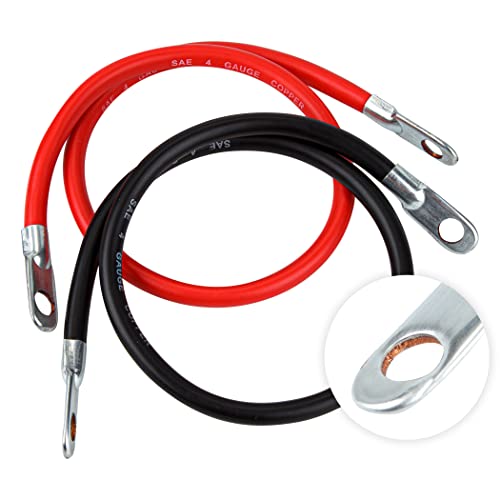
This kit provides 4 AWG copper cable with 24 inches length per line, designed for vehicle, trailer, RV, solar, and boat wiring. It supports 3/8″ stud connections and uses zinc-plated 95% copper lugs for excellent corrosion resistance. A refined stamping process enhances current flow and reduces resistance, contributing to reliable power delivery in marine and off-grid setups.
4 Gauge Marine Grade Electrical Primary Cable By NOVINO

This 4 AWG marine-grade cable uses tinned copper for superior conductivity and corrosion resistance. It features thick outer insulation to resist saltwater exposure, high-temperature, and oxidation. The heavy-duty construction makes it suitable for boat wiring, truck, RV, and other multi-battery configurations, providing reliable connections in demanding marine environments.
2 Gauge Marine Primary Tinned Copper Battery Cable By NOVINO

This 2 AWG cable emphasizes tinned copper for better conductivity and corrosion resistance, with a robust outer insulation rated for saltwater exposure and high temperatures. It is designed for long-lasting performance in boat wiring, RVs, trailers, and other battery-powered systems, making it a versatile option for multi-battery layouts and engine compartments.
END GAME 2 AWG Marine Battery Cables
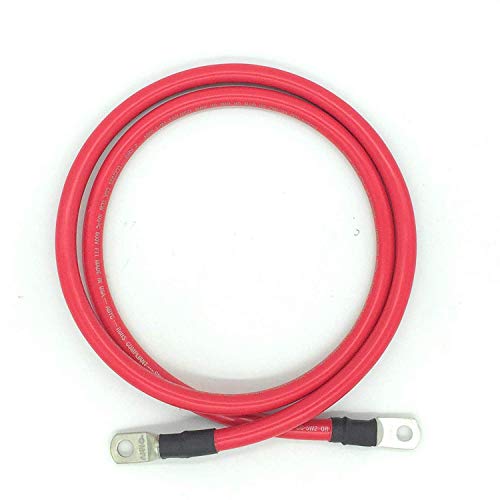
End Game offers 2 AWG marine cables with heavy-duty, fully sealed lugs using adhesive-lined heat shrink to prevent corrosion. The PVC insulation is oil- and fuel-resistant, providing robust protection in harsh marine environments. These cables meet or exceed USCG and ABYC specs and are suitable for cars, trucks, RVs, solar systems, and inverter cables in marine settings.
Buying Guide: Key Purchase Considerations
When selecting battery cables for boats and marine equipment, consider these factors to ensure reliability, safety, and compatibility across systems:
- Conductor Material: Copper offers the best conductivity and durability. Look for tinned copper in marine applications to reduce corrosion from saltwater.
- Gauge and Length: Match the gauge to the load and distance between batteries and components. Longer runs require thicker insulation to minimize resistance and voltage drop.
- Lug Size and Compatibility: Ensure lugs fit standard terminals (commonly 3/8 inch) and that the lugs are corrosion-resistant and heat-shrink sealed to prevent moisture ingress.
- Insulation and Jacket: Marine environments demand insulation that resists salt, fuel, oil, abrasion, and UV exposure. PVC jackets with heat-shrink seals are common for added protection.
- Sealing and Protection: Heat-shrink tubing and adhesive-lined seals prevent moisture and salt intrusion, extending cable life in harsh conditions.
- Standards and Certifications: USCG and ABYC compliance can indicate suitability for marine use and safety practices.
- Application Scope: Consider whether the cables are intended for battery-to-inverter, battery-to-load, or battery relocation; some kits are designed for automotive or RV use but perform well in boats too.
- Durability Under Vibration: Marine installations experience constant movement. Flexible jackets and robust lug assemblies help resist vibration-induced wear.
Perspectives to weigh include cost versus durability, single-battery versus multi-battery layouts, and the trade-off between shorter, higher-grade runs and longer, more economical options. For critical systems (inverters, essential electronics), prioritize thicker insulation, sealed lugs, and corrosion-resistant materials. For auxiliary or non-critical circuits, standard marine-grade cables with heat-shrink protection may be sufficient.