Best Cheap Jon Boat Motors for Safe, Efficient Onboard Power
Looking for low-cost, reliable propulsion for a jon boat? This guide highlights affordable trolling and outboard options that balance cost with practical performance for common jon boat setups. The top picks cover transom-mount electric motors for lighter craft, compact gas motors for inflatable and small boats, and mid-range options for bigger loads. This overview helps buyers choose by vessel size, typical water conditions, and desired runtime. The following table summarizes the featured products to compare at a glance.
| Product | Best For | Key Benefit |
|---|---|---|
| Newport NV-Series 62lb Thrust | Larger jon boats, heavier loads | High thrust for windy or current-heavy days |
| Newport NV-Series 36lb Thrust | Kayaks, small boats, light loads | Quiet, efficient propulsion |
| 4 Stroke Small Outboard Motor 4 hp | Inflatables, canoes, small jon boats | Versatile, short shaft option |
| BJTDLLX 6HP Outboard | Small to mid-size boats | 360° steering, quick reversals |
| FXEIPOL 9 HP Outboard | 15–20 ft boats, inflatable | Reliable power and durable build |
Newport NV-Series 62lb Thrust Trolling Motor

Best for larger jon boats and heavier loads, the 62 lb thrust electric trolling motor delivers strong propulsion when wind, current, or longer runs threaten to slow trips. It is designed for saltwater use and features corrosion-resistant construction to hold up in tough conditions. The large three-blade propeller provides substantial push and improved control, making it a practical upgrade for anglers and utility boaters who need reliable, high-thrust performance.
Who this is for: boaters with bigger wakes, heavier gear, or multi-hour outings. Why selected: high thrust capacity helps maintain speed and maneuverability where lighter motors struggle. Caution: heavier motors draw more battery power, so plan longer runs with a solid battery capacity.
Newport NV-Series 36lb Thrust Trolling Motor
Best for kayaks, canoes, inflatables, and small boats, this 36 lb thrust model prioritizes portability and battery efficiency. It’s suitable for lighter setups where quiet operation and longer battery life matter most. The saltwater-capable build helps ensure reliable performance in both freshwater and coastal waters.
Who this is for: casual anglers and DIY boaters who need easy portability. Why selected: efficient two-blade propeller reduces battery drain and keeps operation simple. Caution: lower thrust means it may struggle in strong winds or heavy current.
4 Stroke Small Outboard Motor 4 hp

This compact outboard is designed for inflatables, kayaks, dinghies, and small jon boats. It runs on a 4-stroke engine with air cooling, offering extended endurance thanks to a 1.75 L fuel tank. It suits boaters who need dependable power without the bulk of larger motors and appreciate a 360-degree steering system for reverse and maneuvering.
Who this is for: budget-conscious boaters needing versatile propulsion for small vessels. Why selected: long-running fuel capacity and easy control. Caution: expect limited top speed on larger loads or choppy conditions.
BJTDLLX 6HP Outboard Motor

Best for small to mid-size boats requiring robust, flexible handling, this 6 HP two-stroke outboard boasts 360° steering and corrosion protection. It can push up to 1000 kg with reverse gear and stepless speed control, making it a practical choice for anglers and small boaters who need reliable, responsive control in varied water conditions.
Who this is for: boaters needing strong steering control and a sturdy build at a modest price. Why selected: versatile turning and easy maneuverability. Caution: two-stroke engines require proper fuel mixing and maintenance to sustain efficiency.
FXEIPOL 9 HP Outboard Motor
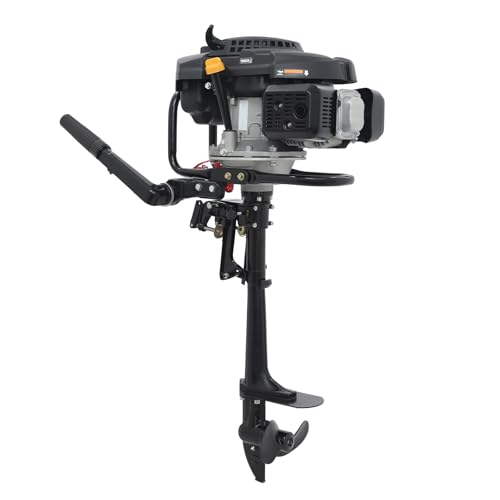
Choose this if you need reliable power for mid-sized boats, inflatable dinghies, or canoes. The 9 HP, 224cc engine uses air cooling and a CDI ignition for straightforward starting and reliable operation. It supports 15–20 ft boat configurations with durable construction suitable for mixed water use.
Who this is for: boaters seeking stronger gas-powered propulsion within a compact footprint. Why selected: higher horsepower translates to better planing and speed on larger small boats. Caution: gas engines require fuel management and maintenance to prevent performance drops over time.
Buying Guide
What type of motor should you choose for a jon boat? For calm lakes or shallow rivers, a lighter trolling motor (36 lb) can be enough, especially if you prioritize battery efficiency and quiet operation. For bigger jon boats or windy days, a higher-thrust trolling motor (62 lb) or a compact gas outboard (4–9 HP) can deliver the needed power and reliability.
Key considerations include boat size and weight, typical water conditions, desired runtime per trip, and maintenance expectations. Trolling motors excel in precise handling and silent operation, while small gas outboards offer more speed and independence from battery capacity. Always verify shaft length, mounting compatibility, and fuel requirements with your boat layout.
Choosing by use case:
- Heavy load or windy conditions: 62 lb thrust trolling motor or 6–9 HP gas outboard
- Lightweight craft or portability: 36 lb thrust trolling motor or compact electric options
- Mixed environments (freshwater and saltwater): corrosion-resistant builds and compatible drive systems
FAQ
- Q: What’s the main difference between trolling motors and outboards for jon boats? A: Trolling motors provide precise, quiet propulsion ideal for fishing, while outboards deliver greater speed and maneuverability for general boating tasks.
- Q: Is higher thrust always better for jon boats? A: Not necessarily. Higher thrust helps in wind and current but drains batteries faster and adds weight. Match thrust to boat size and typical conditions.
- Q: Are saltwater-rated motors essential for jon boats? A: If you operate near saltwater or humid coastal areas, corrosion-resistant builds extend life. For freshwater only, standard models may suffice.
- Q: How does shaft length affect performance? A: A longer shaft keeps the propeller clear of the hull spray and improves steering in deeper water; a shorter shaft is lighter and easier to install on small vessels.
- Q: Do gas outboards require more maintenance than electric motors? A: Yes. Gas engines need fuel management, oil changes, and occasional tune-ups, whereas electric motors generally require less ongoing service.
- Q: Which motor is best for beginners? A: A lightweight trolling motor (36 lb) or a small 4 hp outboard provides simple control and quick learning without heavy equipment.