Best Deep Cycle Battery for Boat Travel and Reliability
For boaters, a dependable deep cycle battery is a cornerstone of on-water reliability. This guide highlights five high-performance AGM and lithium options that balance weight, longevity, and practical trolling motor or accessory power. Whether you’re cruising for days or chasing trophy fish, these batteries are designed to deliver consistent power with maintenance-free operation and robust safety features.
| Product | Brand | Type | Approx. Key Benefit |
|---|---|---|---|
| Newport 12V50Ah Deep Cycle | Newport Vessels | AGM | Lightweight, sealed, trolling motor ready |
| Weize Dual Purpose Group 24M | WEIZE | AGM Multirole | High performance, dual purpose |
| Interstate Batteries Marine Deep Cycle 100Ah | Interstate Batteries | AGM | Extreme deep-cycle power |
| Weize Deep Cycle AGM 100Ah | WEIZE | AGM | Maintenance-free, long storage |
| ExpertPower 12v 33Ah | ExpertPower | AGM | Compact, reliable SLA option |
The following sections present five carefully chosen options. Each entry includes product highlights drawn from their listed features to help you compare performance, maintenance needs, and compatibility with typical marine rigs such as trolling motors, inverters, and onboard accessories.
Newport 12V50Ah Deep Cycle Battery

The Newport 12V50Ah Deep Cycle Heavy-Duty Marine Battery is a lightweight, sealed AGM design tailored for trolling motors and compact power needs aboard a boat. Weighing 32 pounds, it offers portable handling without sacrificing performance. Its sealed construction minimizes risk of leaks, making it suitable for wet environments and recessed compartments. The battery is designed for reliable, steady output, ensuring smoother operation of trolling motors and onboard electronics during extended outings.
Key features include a lightweight yet sturdy build, sealed AGM chemistry for durability, and compatibility with trolling motors. This combination makes it a practical upgrade for anglers and weekend cruisers who value easy installation and dependable power in a compact package.
Weize Dual Purpose AGM Battery BCI Group 24M

The WEIZE Group 24M is a dual-purpose AGM marine and RV battery built for deep cycling and solid starting power. It offers a low internal resistance with high output, delivering longer cycle life—claimed to be about twice as long as traditional flooded marine batteries. The design prioritizes reliability in demanding marine environments, with a designated left-positive and right-negative terminal layout that supports flexible wiring for trolling motors, accessories, and backup systems. The battery’s versatility makes it a strong contender for boat setups that require both steering power and auxiliary loads.
Notable attributes include quick charging potential and a straightforward maintenance profile. While it’s positioned as a dual-purpose unit, users should manage charging parameters within the recommended voltage and current ranges to optimize longevity and performance on the water.
Interstate Batteries Marine Deep Cycle 100Ah
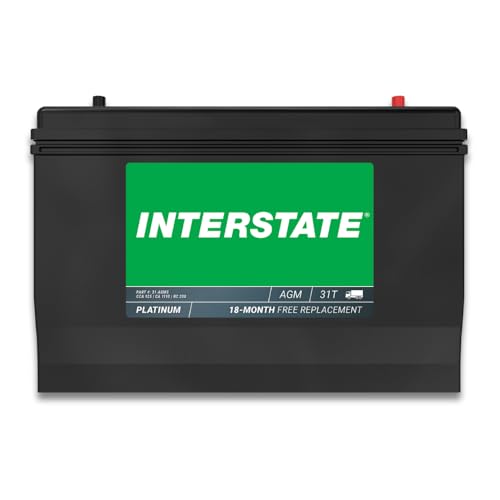
Interstate’s Marine Deep Cycle 100Ah AGM battery combines high-cranking power with extended deep-cycle performance. The design emphasizes durability for power-hungry boat systems, from the motor to accessories like depth finders and windlasses. Thick plates support repeated discharge and recharge cycles, helping to sustain capacity over time. The battery is positioned as a robust, long-lasting option for anglers and boaters who rely on consistent power across extended trips.
Its key strengths lie in extended service life, strong deep-cycle capabilities, and a reputation for reliable marine performance. Given its 100Ah capacity, it’s well-suited for mid-sized vessels with moderate electrical loads and trolling motor usage. Prospective buyers should ensure compatibility with their boat’s electrical system and appropriate charging strategy to maximize lifespan.
Weize Deep Cycle AGM 100Ah Battery
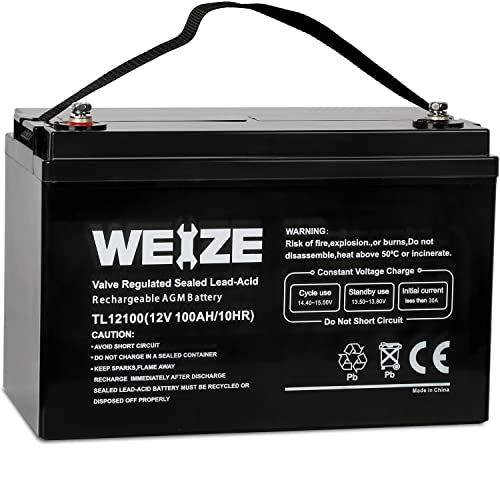
Weize’s 12V 100Ah Deep Cycle AGM battery emphasizes maintenance-free operation with a low self-discharge rate. Its AGM construction minimizes the risk of acid leakage, making it practical for boats with limited ventilation or tight compartments. The battery supports a wide operating temperature range and offers solid discharge current for trolling motors and onboard electronics. This model is a dependable choice for boaters seeking a balance between capacity, reliability, and low maintenance demands.
Consider its storage and charging needs: AGM batteries perform best when kept within recommended temperature ranges and connected to a compatible charger that respects recommended voltage and current limits. The 100Ah capacity provides substantial days of operation for typical marine loads before recharging is necessary.
ExpertPower 12v 33Ah Rechargeable Deep Cycle Battery

The ExpertPower 12V 33Ah deep cycle AGM battery focuses on compact, reliable power suitable for smaller boats or as a supplementary power source. Its sealed construction supports maintenance-free operation and a straightforward setup for trolling motors, lights, and small electronics. The unit is positioned as an affordable option with favorable reviews for reliability and ease of use, making it appealing to boaters who want a dependable secondary or backup battery alongside a primary high-capacity cell.
Users should consider the 33Ah capacity as best suited for lighter power loads or as a reserve source for essential systems during shorter trips. Pairing with a larger primary battery or solar setup can extend overall endurance on longer outings.
Buying Guide: Key Considerations For Boat Deep Cycle Batteries
Choosing the right deep cycle battery for a boat involves balancing capacity, chemistry, weight, and lifecycle expectations against your vessel’s electrical demands. Here are essential factors and how they influence decision-making:
- Battery chemistry: AGM batteries offer maintenance-free operation, resistance to vibration, and safe sealed design ideal for marine use. Lithium options provide higher energy density and longer lifecycles but at a higher upfront cost. Consider the total cost of ownership and charging infrastructure when selecting chemistry.
- Capacity and discharge rate: For trolling motors and onboard electronics, aim for a battery bank that can sustain loads without frequent recharging. A higher Ah rating means longer run times but heavier batteries; ensure your boat’s weight capacity and mounting space align with your plan.
- Weight and space: Lighter AGM batteries aid in easier handling and installation, which matters for small vessels or kayaks. Lithium options dramatically reduce weight but may require a more advanced charging system and BMS awareness on multi-battery configurations.
- Charging compatibility: Ensure your charger or solar setup can safely charge the selected battery type. Some AGM batteries tolerate higher charging currents, while LiFePO4 cells require specific BMS protections and voltage limits.
- Durability and safety: Look for sealed enclosures, vibration resistance, and temperature tolerance. In harsh marine environments, a durable case and reliable thermal protections reduce failures and extend service life.
- Lifecycle expectations: Deep cycling capability is crucial for boats using electronics extensively or with frequent start-and-stop cycles. Lithium variants typically offer more cycles; AGM units remain reliable and cost-effective for many applications.
- Warranty and support: A solid warranty and accessible customer service can be decisive, especially for boating gear that sees harsh conditions and extended use over seasons.
When evaluating options, align the battery choice with your boat type, typical trip length, and whether you plan to scale with additional solar panels, inverters, or auxiliary systems. The right mix of AGM and lithium cells can optimize endurance, weight, and reliability without compromising safety or performance on the water.