Best Jack Plates for Boat Motors: Top Picks for Performance on the Water
The right jack plate can optimize engine height, trim, and overall performance for a variety of boats. This guide highlights five high-quality options that balance ease of use, durability, and adaptability for common outboard setups. All selections are suitable for recreational and semi-professional use, aiming to improve planing, handling, and efficiency on American waterways.
Summary Table of Selected Products
| Product | Brand | Engine Range | Mount Type | Key Benefit |
|---|---|---|---|---|
| Adjustable Manual Boat Jack Plate – High Grade Marine Aluminum | ONTHEFLY JACK PLATES | Up to 30 HP | Clamp/Transom Mount | Fast on-water adjustments |
| MJ-1-DP Jack Plate 4″ Setback | Camoo | Up to 35 HP | Wooden mounting block included | 4″ setback for short shaft, improved handling |
| 4″ Adjustable Jack Plate Manual Transom Set Back | FQRANBO | Up to 150 HP | Transom | 4″ vertical movement and 4″ setback |
| Atlas Car Micro Jacker | T-H Marine | Up to 115 HP | Transom mount | Compact design, strong lift for shallow water |
| MJ-1-DP Mini Jacker | T-H Marine | Up to 35 HP | Clamp-on | 4″ standoff, 3″ vertical offset |
Adjustable Manual Boat Jack Plate From On The Fly

The ONTHEFLY jack plate is designed for fast, on-water adjustments, allowing you to raise or lower your motor quickly for changing conditions. It is optimized for boats with up to 30 horsepower and is built from marine-grade aluminum to resist corrosion. Its user-friendly design supports a broad range of boats and setups, making engine height changes simple without extensive tools. This model prioritizes speed and convenience, helping boaters adapt to rough water, shallow launches, or varying trim needs.
MJ-1-DP Jack Plate 4” Setback For Small Engines

The Camoo MJ-1-DP is a 4-inch setback jack plate designed for outboards up to 35 HP. It includes a wooden mounting block model, ensuring a precise fit on boats with shorter transoms. The jack plate extends 4 inches off the transom, yielding a higher mounting position that can improve planing performance and handling for small boats and short shaft engines. This option emphasizes secure mounting and straightforward installation for DIY enthusiasts.
4″ Adjustable Jack Plate For Small Boats
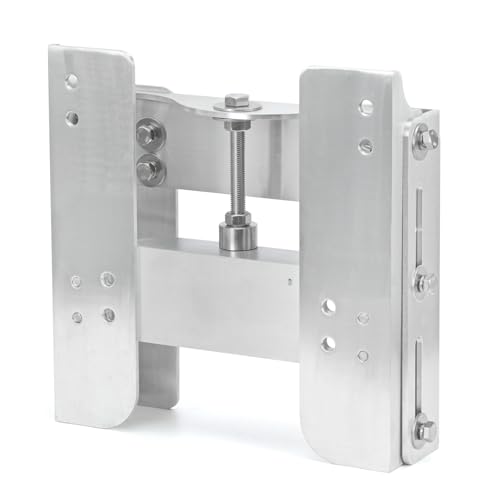
The FQRANBO model provides 4 inches of adjustable vertical movement plus 4 inches of setback for engines up to 225 horsepower. It weighs 24 pounds and uses bronze and brass hardware to reduce binding. The jack plate is designed to help raise the engine, adjust trim, and flatten the boat’s hull for improved control and idle speed. This option balances strength with ease of adjustment, making it a versatile choice for many mid-sized boats.
Atlas Car Micro Jacker By T-H Marine

The T-H Marine AHJM-4-DP Atlas Car Micro Jacker is tailored for small outboard applications with a robust lift up to 425 pounds. It is particularly suitable for shallow-water boats such as Gheenoes or jon boats, where precise engine height significantly impacts performance and safety. This jack plate emphasizes a compact footprint without sacrificing strength, making it a practical choice for compact watercraft that need reliable off-transom mounting.
Mini Jacker By T-H Marine (MJ-1-DP)

The MJ-1-DP Mini Jacker from T-H Marine offers a compact clamp-style jack plate with a 4-inch standoff and 3-inch vertical offset, designed for small outboard motors up to 35 HP. This model focuses on ease of installation, quick adjustments, and stable performance for light-duty boats. It is an excellent option for anglers and casual boaters seeking a simple way to improve acceleration and planing with small engines.
Buying Guide: Key Purchase Considerations And Comparisons
When selecting a jack plate, consider how you use your boat, the engine size, and the mounting configuration. The following points help compare common options and avoid mismatches.
- Engine compatibility: Ensure the jack plate supports your horsepower rating and shaft length. Some models target up to 35 HP, while others handle higher power and bigger engines.
- Mounting style: Clamp-on, transom, or wooden mounting blocks each offer different installation complexities and compatibility with boat transoms.
- Vertical adjustment range: More vertical travel provides greater fine-tuning of engine height, which affects planing, speed, and fuel efficiency.
- Setback and trim: A larger setback moves the engine away from the transom, which can improve stability at higher speeds but may require more cockpit adjustment.
- Materials and hardware: Look for corrosion-resistant aluminum and hardware (bronze/brass) in marine-grade components to reduce binding and extend life.
- On-the-water adjustability: Some designs emphasize quick adjustments without tools, enabling rapid responses to waves, load changes, or shallow water.
- Installation ease: DIY-friendly options with pre-cut blocks or included mounting hardware reduce setup time and errors during installation.
- Weight and rigidity: Heavier plates generally support higher horsepower setups and tougher conditions but may affect overall weight and installation fitment.
- Maintenance: Prefer jack plates with accessible grease fittings and simple disassembly for inspection and lubrication.
For boaters prioritizing speed of adjustments and on-water control, manual jack plates offer quick responses with minimal downtime. If you operate larger engines or require greater stability, a higher horsepower-rated plate with robust construction may be preferable. Always verify compatibility with your boat’s hull design, transom type, and motor mounting hardware before purchase.