Best Lithium Battery Charger for Boats: Top 5 Onboard Chargers
Choosing the right lithium battery charger for a boat is critical for reliability, battery longevity, and safety on the water. The following selections emphasize onboard, 12V systems capable of charging both lead-acid and lithium batteries, including LiFePO4. Each option is designed for marine environments with features like IP-rated waterproofing, multiple charging modes, and temperature compensation. This guide highlights five strong contenders to help boat owners compare banks, amperage per bank, and mode options without the hassle of research across dozens of models.
| Product | Brand | Banks | Total Amps | Battery Types |
|---|---|---|---|---|
| NOCO Genius GEN5X2 | NOCO | 2 | 10A | Lead-Acid & Lithium |
| FirstPower Pro 5X2 | FirstPower Pro | 2 | 10A | Lead-Acid & Lithium |
| NOCO GEN5X3 | NOCO | 3 | 15A | Lead-Acid & Lithium |
| FirstPower Pro 3-Bank 10X3 | FirstPower Pro | 3 | 30A | Lead-Acid & Lithium |
| NOCO GENIUS1 | NOCO | 1 | 6A | Lead-Acid & Lithium |
This selection prioritizes models offering multi-battery charging, lithium compatibility, and marine-grade durability. The products below are organized to help you compare how many banks you’ll need, per-bank amperage, and which charging modes (12V, AGM, Lithium) each device supports. All options are backed by reputable brands known for marine electrical reliability.
NOCO Genius GEN5X2: 2-Bank Onboard Charger
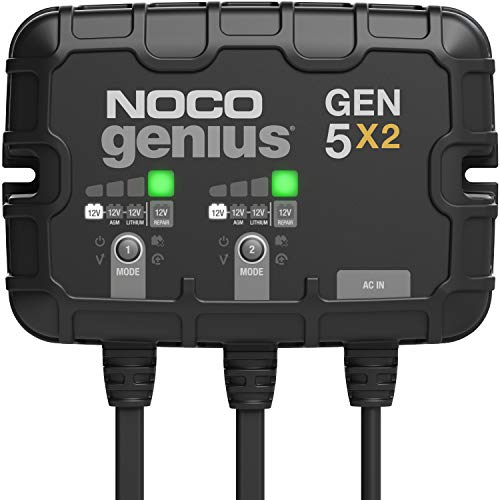
The GEN5X2 provides two independent charging banks for 12V systems, delivering a total of 10A (5A per bank). It is designed to be compact yet capable in harsh marine environments, emphasizing overcharge protection and temperature compensation. Modes include 12V, 12V AGM, 12V Lithium, and a Repair Mode for restoring batteries. Suitable for both lead-acid and lithium chemistries, this unit is tuned for onboard reliability and precise maintenance across varying battery types.
FirstPower Pro 5X2: 2-Bank 10A Marine Charger

This 2-bank charger offers 5A per bank with IP68 waterproof sealing for 24/7 onboard charging. It supports 3 charging modes for each battery: 12V SLA/AGM, 12V Lithium, and 12V Calcium, allowing two batteries to be charged concurrently. Notably, it includes a Force Mode that can initiate charging for deeply discharged cells (below 1V) by holding the MODE button. A robust option for mixed-fleet boats and deep-cycle applications.
NOCO Genius GEN5X1: 1-Bank 5A Charger
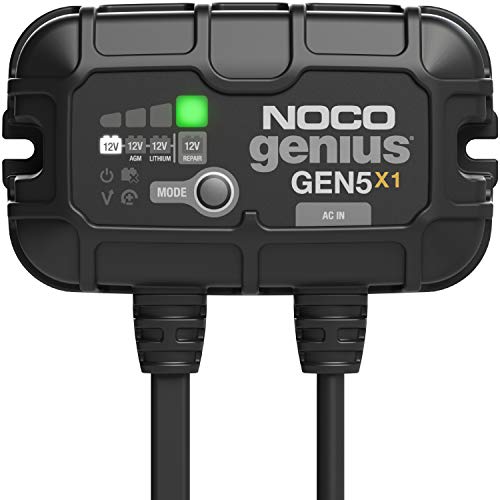
The GEN5X1 is NOCO’s compact, single-bank charger option offering 5A of charging power for one battery. It features selectable modes for 12V, AGM, Lithium, and a Repair Mode, enabling precise maintenance for lead-acid and lithium batteries alike. Its small footprint makes it suitable for smaller boats or spaces where only one bank is needed, while still providing temperature-compensated charging for safer performance in varied climates.
FirstPower Pro 3-Bank 10X3: 3-Bank 30A

This upgraded model provides three independent banks totaling 30A (10A per bank). It’s designed for 12V systems and supports three charging modes: 12V SLA/AGM, 12V Lithium, and 12V Calcium. The unit is IP68 waterproof and allows all three batteries to be charged simultaneously with per-battery mode selection. A strong choice for larger boats with multiple battery banks and diverse chemistries.
YONHAN 25A Battery Charger

The YONHAN model delivers a 25A charging capability with 12V and 24V operation, and five adjustable current levels (2A/8A/20A/25A/AUTO). This flexibility supports LiFePO4 and various lead-acid chemistries, making it suitable for boats requiring rapid charging or tailored battery care. It also features a Booster mode for quick charging bursts and a wide input range for different shore power setups, aiding in efficient battery restoration during extended trips.
Buying Guide
Key considerations when choosing a marine lithium battery charger include bank count, total and per-bank amperage, and compatibility with your battery chemistries. Multi-bank models simplify management of separate main and auxiliary batteries, while higher per-bank amperage reduces charging time for large packs. Look for IP-rated waterproofing (IP68 is common) and temperature compensation to prevent overcharging in heat and undercharging in cold conditions. Some chargers offer Force or Boost modes to recover deeply discharged batteries, which can be useful after storage or long downtimes.
Charging modes are important: ensure the charger explicitly supports 12V SLA/AGM, 12V Lithium, and CALCIUM if your boat uses a mix of battery types. Independent bank operation means one battery can be charged without affecting the others, which is valuable for complex systems with multiple critical circuits. For installations with limited space, compact units that maintain performance can reduce wiring complexity and mounting challenges.
Durability in marine settings matters. Look for solid sealing against salt spray and splash, robust connectors, and clear indicators for charging status. If you operate in extreme environments, a model with automatic temperature compensation will help protect battery life and preserve capacity. Finally, consider cost of ownership, including potential maintenance modes, diagnostics, and the availability of service or replacement parts from the manufacturer.
When evaluating options, align the charger’s banks and current with your boat’s battery bank layout and typical usage. For boats with lithium or LiFePO4 packs, prioritize models advertising explicit lithium compatibility and accurate charging profiles. If you often leave your vessel unattended, a charger with reliable float maintenance ensures batteries stay ready for the next voyage without risk of overcharging.