Best Solar Panels for Yachts: Reliable Power on the Water
Answering the question for yachts and marine enthusiasts: these selected solar panel kits provide durable, lightweight, and efficient options for keeping electronic gear charged while at sea. They’re suited for boaters who want steady off-grid power, low maintenance, and easy installation. The top picks vary by budget, panel size, and mounting fit, but all are designed for marine environments and outdoor exposure.
The following table highlights the five products chosen for yacht use, focusing on suitability, wattage, and notable features to help compare options at a glance.
| Product | Key Benefit for Yachting | Watts / Voltage | Best For |
|---|---|---|---|
| ECO-WORTHY 200W Kit | High efficiency monocrystalline cells and robust frame for maritime environments | 200W / 12V or 24V | Mid-sized vessels needing solid daily output |
| Voltset 200W 12V Panels (2-Pack) | Compact, modular approach with high efficiency and easy mounting | 200W total / 12V (two 100W panels) | Smaller yachts or boats with flexible mounting space |
| TOPENS TSQ20W Solar Kit | Lightweight, versatile 20W kit for auxiliary charging | 20W / 24V | Gate-openers, light-duty marine accessories |
| XINPUGUANG 100W Flexible Panel Kit | Flexible, ultra-light option for curved surfaces on boats | 100W / 12V | Ribbed hulls, cabins, or irregular rooftops |
| TOPENS TSP30W Kit | Reliable, compact 30W kit with mounting readiness | 30W / 24V | Small craft needing dependable trickle charging |
ECO-WORTHY 200W Solar Panel Kit
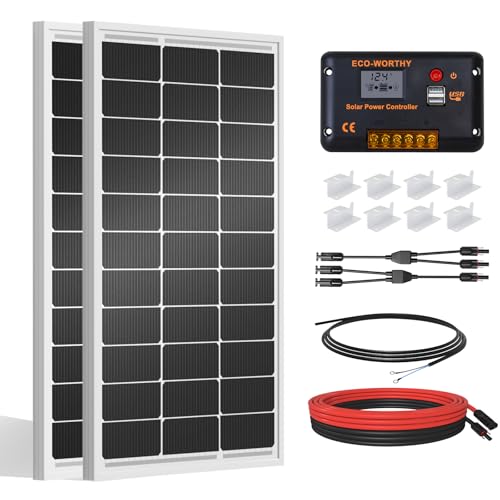
This kit uses high-efficiency monocrystalline cells and includes a 30A PWM charge controller. It is designed for 12V or 24V off-grid systems, making it adaptable for boats, RVs, or cabins. Best for mid-sized yachts needing solid daily output in sunny conditions. The panel features a corrosion-resistant aluminum frame and air-tight junction box for marine exposure. A potential limitation is the PWM controller’s efficiency relative to MPPT designs in variable sunlight.
Why it’s a good yacht choice
- High efficiency cells for better performance in light and mid-day sun.
- Rugged framing and IP65-rated junction box for outdoor use.
- Broad compatibility with 12V/24V marine electrical systems.
Voltset 200W 12V Solar Panels (2-Pack)
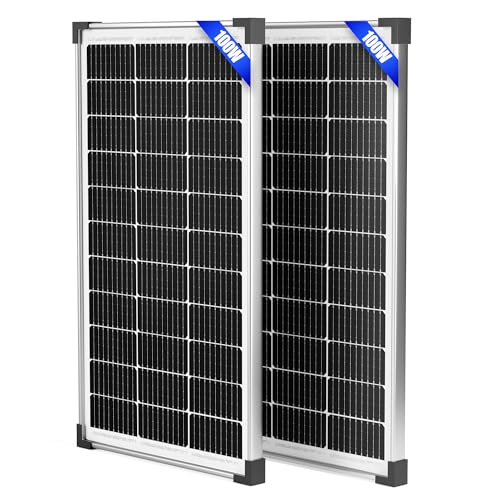
Two 100W monocrystalline panels deliver a total of 200W with a compact 38.58×21.25×1.18 inches footprint. The panels boast 23–30% conversion efficiency and a design that supports quick mounting with pre-drilled backholes. They’re ideal for yachts with limited deck space and preconfigured mounting plans. A caveat is that MPPT charging is not included, so performance may vary with battery type and charging strategy.
Why it’s a good yacht choice
- High efficiency cells and long lifespan (25 years referenced in specs).
- Lightweight for easy rigging on small to mid-size boats.
- Simple plug-and-play installation with mounting holes and leads.
TOPENS TSQ20W Solar Panel Kit

This 20W 24V monocrystalline kit is designed for reliable charging on boats, RVs, or garden setups. It includes durable frame and tempered glass with mounting hardware. Best for smaller marine accessories needing a steady trickle charge. The kit recommends using a compatible charge controller (not included), so plan for full integration with your battery system. Avoid if you require higher wattage for speedier recharging or for lithium-specific setups.
Why it’s a good yacht choice
- Compact, corrosion-resistant construction suitable for small decks.
- Positive shading tolerance with monocrystalline cells.
- Complete mounting hardware supports straightforward installation.
XINPUGUANG 100W Flexible Panel Kit

The 100W flexible panel uses high-efficiency 210mm monocrystalline cells with 23–24% conversion. Its ultra-lightweight, flexible design makes it highly adaptable for curved or irregular surfaces common on yachts. IP67 waterproof rating and durability against snow and wind loads enhance marine reliability. Best for fitting on non-flat surfaces, but its flexible nature may limit long-term rigidity on certain installations.
Why it’s a good yacht choice
- Flexible and ultra-light for curved hulls and cabin roofs.
- IP67 rating provides strong water ingress protection.
- High efficiency in a slim, easy-to-mitigate package.
TOPENS TSP30W Solar Panel Kit

This 30W, 24V monocrystalline kit is designed for efficient battery charging on marine setups. It includes robust mounting hardware and cables, making it a practical choice for yachts needing a dependable trickle-charge solution. A limitation is its lower wattage, which means longer charging times under cloudy conditions. Best for small auxiliary systems or as a supplementary charger on larger boats.
Why it’s a good yacht choice
- Solid 24V charging compatibility for marine batteries.
- Pre-drilled mounting holes and included cables simplify installation.
- Lower power option that combines well with larger solar arrays on bigger boats.
Buying Guide: Solar Panels for Yachts
Key considerations for selecting yacht-friendly solar panels include system voltage compatibility, mounting space, marine durability, and overall power needs. The following practical questions help refine choices:
- What is my boat’s electrical system voltage (12V vs. 24V)? Choose panels that match or are easily bridged to your battery bank.
- Do I need flexible panels for curved surfaces or rigid panels for flat deck space? Flexible panels excel on irregular hulls, while rigid panels can offer higher durability per watt.
- Is MPPT charging necessary for efficiency in variable light? MPPT controllers improve efficiency in shadowed or mixed sunlight but add cost.
- How much daily energy do I want to generate? Estimate appliance use and seasonal sun to size wattage accordingly.
- What mounting method fits my vessel? Pre-drilled back holes and marine-grade frames reduce installation time but confirm compatibility with railings, decks, and hatches.
- Are there weight and space constraints on deck or flybridge? Lighter, modular packs offer flexible layouts without overburdening the vessel.
Multifaceted considerations
- Durability: Look for corrosion-resistant frames and waterproof enclosures to withstand salt air.
- Scalability: If you anticipate growing power needs, modular panels (like 2×100W packs) can be extended later.
- Maintenance: Check for simple connections and clear labeling to facilitate routine checks.
Frequently Asked Questions
- Q: Are flexible marine panels better than rigid ones for yachts?
A: Flexible panels are advantageous on curved surfaces, but rigid panels often offer greater durability and easier mounting on flat areas. - Q: Do I need an MPPT controller for a yacht?
A: MPPT controllers improve efficiency, especially in variable light, but PWM may suffice for smaller loads or as a supplementary system. - Q: Can I mix different panel brands on the same system?
A: Mixing can work if voltages and current ratings are compatible with your charge controller and battery bank; ensure safe, balanced wiring. - Q: How do I estimate daily solar output on a yacht?
A: Consider sun exposure, panel wattage, orientation, and shading throughout typical sailing routes and seasons. - Q: What maintenance is required for marine solar panels?
A: Regular cleaning to remove salt, debris, and bird droppings; inspect cables and mounting hardware for corrosion and loosening. - Q: Should I plan for future expansion?
A: Yes. Choosing modular kits or adding extra panels later avoids oversizing the current system and keeps installation straightforward.